


XMAS Blossom - filter blend
XMAS Blossom - filter blend
Couldn't load pickup availability
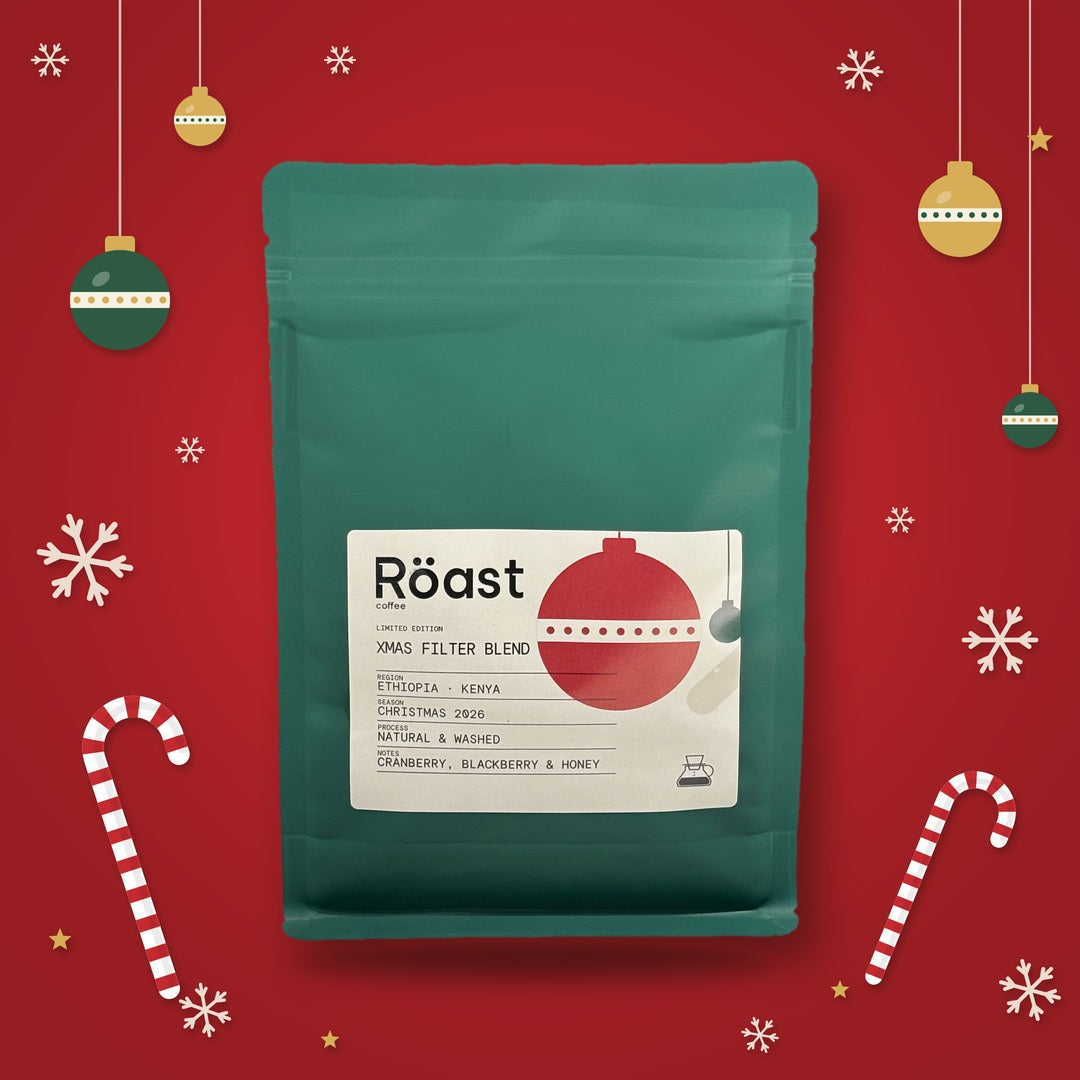
XMAS Blossom – Filter Blend
Ünnepi filter blend két afrikai kávéból, amelyek kiegészítik egymást. A blend 60%-a etiópiai Gedeb Lalesa, 40%-a kenyai Mururiri PB.
Etiópia – Gedeb Lalesa (60%)
Yirgacheffe Gedeb körzetéből, 2150–2200 méteres magasságból származik. Kistermelők termesztik kis családi parcellákon, árnyékoló fák alatt, és natúr, lassú szárítással dolgozzák fel. Ez adja a blend édes, gyümölcsös alapját és testességét.
Kenya – Mururiri PB (40%)
Kenya központi részéről, Embu megyéből érkezik. Több mint 700 kistermelő szállítja a kézzel szedett cseresznyét a Kiangawa Szövetkezet Mururiri mosóállomására. A farmok 1600–1800 méteren fekszenek, és klasszikus kenyai fajtákat (SL 28, SL 34), valamint újabb nemesítéseket (Ruiru 11, Batian) termesztenek. A PB a peaberry rövidítése: ennél a szemtípusnál a kávécseresznyében kettő helyett csak egy, kerekded szem fejlődik. A kávét teljesen mosott eljárással dolgozzák fel, majd afrikai ágyakon lassan szárítják. Ettől lesz ragyogó, citrusos savassága és tiszta lecsengése, ami frissességet ad a keveréknek.


About the region
Due to the terrain, coffee cherries are harvested exclusively by hand, which allows for careful selection and the preservation of high quality. Typically, no chemicals are used during cultivation, so the coffee develops naturally, in harmony with the environment.
The regional center is also named Yirgacheffe, while one of its most famous natural attractions is Mount Bonga. A significant number of Gedeo people live in the region, who have been renowned for generations for their sophisticated coffee cultivation and processing traditions, which play a decisive role in the region's globally recognized coffee culture.
About the region
The region's soil is particularly nutrient-rich, deep red volcanic earth, boasting excellent water retention capacity and an ideal mineral composition. Embu receives abundant and balanced annual rainfall, defined by two main rainy seasons. This dual rainy season enables two distinct harvest cycles: the main harvest typically runs from October to December/January, while the smaller, so-called "fly crop" harvest falls in June and July.
The production structure is almost entirely based on smallholder communities. Farmers hand-pick the ripest cherries from their small plots (shamba), which are then transported to local washing stations (factories). The traditional, meticulous washed processing method used here, along with long sun-drying on raised beds, brings out the region's characteristic exceptionally clean, vibrantly fruity, and blackcurrant flavor notes, combined with a syrupy body.